

 Sample Request
 Global 2022-05-20
Smart Manufacturing Transformation — the Next Step for the Medical Packaging Industry


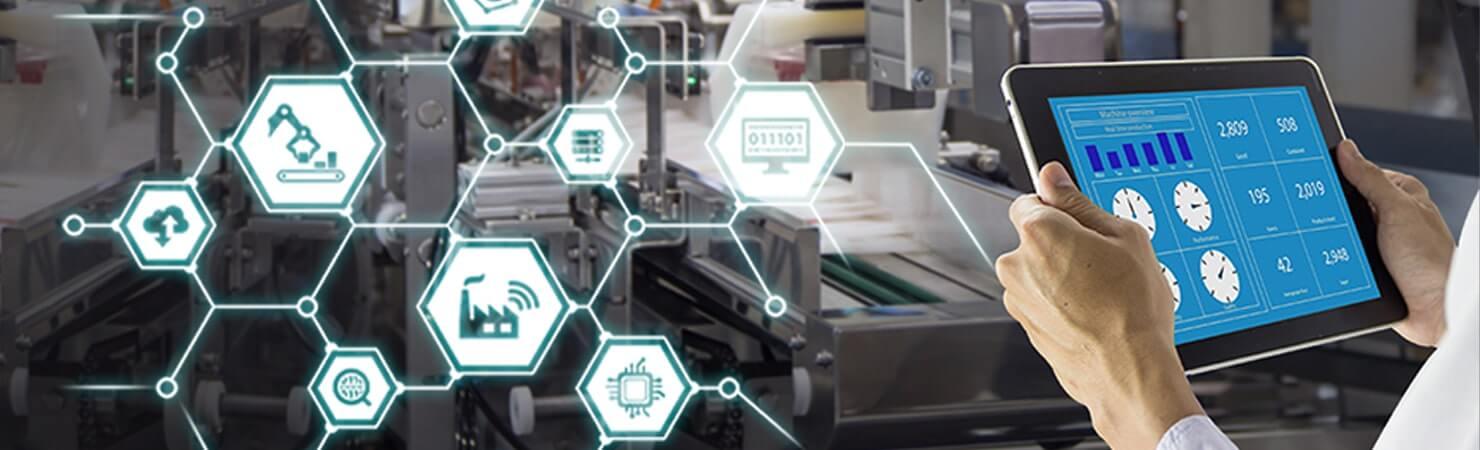
Our parent company, BenQ Materials, has prioritized ESG issues on the agenda. In alignment, sustainability targets have been integrated into SIGMA’s corporate mission. Over the past two years, in the shadow of the COVID-19 pandemic, demand in the medical industry for efficient and reliable solutions has grown. As such, we recognize the immense opportunities of integrated and intelligent processes and systems to achieve better quality, higher efficiency, and increased speed to market with a more flexible production system.
Leveraging BenQ Materials’ experience and core technologies, SIGMA started its smart manufacturing planning in 2021 to include systems integration, the Internet of Things (IoT), big data, auto optical inspection (AOI), and artificial intelligence (AI) to meet the changing demands of clients.
This article discusses how our smart transformation benefits our partners and delves into the next steps for intelligent decision-making through the combined insights of a digital community.
Big Data in Smart Manufacturing
With the rapid development of technology over the past few years, big data analysis, IoT, and AI, are often confusing to the eye. Taking a step back, we ask: what is the purpose of digitalization?The foundation of smart manufacturing is data. In any industry, problems are solved and decisions made based on past experience. But this is difficult to systematize, and there is a lack of objective evidence as reference for empirical decision-making. If all experiences in the workflow can be transformed into data for analysis to yield recommended solutions, deficiencies can be minimized.
Take our parent company as an example. In 2021, BenQ Materials introduced AI technology to perform polarizer warpage improvements. Warpage of the polarizer causes the problem of not being able to absorb the panel or generate air bubbles when laminating. In the past, employees would list as many as 80 possible factors and then analyze the causes of anomalies. With so many variables, analysis is difficult and collating the data is time-consuming. After the company introduced IoT solutions, an algorithm looked at historical data, converged the possible key factors from 80 to 5, and calculated the optimal parameter production range. This helps with the analysis by drawing correlations in the data set that are difficult for humans to observe.
Automation in medical packaging has been around for decades; however, it does not equate to digitalization. As the first step of digitalization, automation is the key to bringing a “smart” concept to facilitate connectivity and data exchange with the help of advanced information technology.
The Road to a Smart Factory
In 2021, SIGMA began implementing automation into various steps of key processes at our Yunlin plant. In a single phase of implementation, the introduction of an automated packaging system freed up many employees from cumbersome packaging procedures. Furthermore, an optimized product transportation path not only centralized stacking operations, but also saved electricity consumption by 87%.
In early 2022, an automated storage and retrieval system (ASRS) was near completion. It not only optimizes storage space, but also simplifies the time of inbound and storage operations to provide accurate inventory management. We will further introduce a manufacturing execution system (MES) and a warehouse management system (WMS) to enhance product management accuracy in production traceability and inventory management. Meanwhile, a tooling system will be introduced to manage the flexo system that controls the life of key machines and tools for the purpose of real-time inspection and front-end abnormality prevention for comprehensive quality control.
The application of AOI is divided into "optical inspection" and "visual integration". Optical inspection is applied in our key manufacturing processes for yield control. Optical inspection can provide while also providing real-time defect detection for printed rolls, while printing Moreover, AOI helps with collecting data on color-printing requirements and standards for discussions with customers on their specific needscolors printed on packaging can establish standards through quantified data for factories and our customers. Yield estimation can also be applied for the film-blowing stage to avoid large-scale abnormal roll production. Meanwhile, AOI monitoring improves the precision of cutting, which can effectively control the same width of sealing edge.
In terms of visual integration, we have developed our own mobile dial-in application to replace the manual hard-copy inspection, which can directly scan the reports of each station and transfer the data directly to the system for our employees to do the consolidation and analysis. In response to good ESG practices promoted by the Group, we have also gone paperless to reduce the impact on the environment and streamline the process to improve efficiency and asset utilization.
Smart Choices for Win-Win Value Creation
Developing smart factories provides an incredible opportunity for SIGMA to enter the next level of quality business applications. As far as sterile medical packaging is concerned, this centers around quality, transparency and traceability. By digitalizing quality and production processes, the industry will benefit from end-to-end traceability to ensure product integrity.
A very important stage in smart manufacturing is to transform data from raw signals captured from a system to full digital maturity. SIGMA strives to synthesize data into knowledge by deploying artificial intelligence to increase the agility, efficiency, flexibility, and quality of decision-making. Ultimately, we aim to implement sales forecasting models to improve the accuracy of forecasts and help customers understand product applications. As for suppliers, we can provide more accurate and flexible procurement and operations intelligence by monitoring and analyzing sales and inventory data to create tangible business value.