

 Sample Request
 Global 2026-04-02
Starting from Trust: Ongoing Hospital Education and Practical Dialogue


Behind every successful surgery in the medical field stands a group of unsung heroes—the Central Sterile Supply Department (CSSD) staff. They handle the cleaning, packaging, and sterilization of large volumes of instruments daily, with each step directly impacting patient safety and medical quality. In 2025, SIGMA visited three hospitals—En Chu Kong Hospital in Sanxia, Far Eastern Memorial Hospital in Banqiao, and Cheng Hsin General Hospital in Beitou—to conduct in-depth educational training and practical exchanges with frontline nursing staff and CSSD personnel.
Looking back, these dialogues were not merely about knowledge transfer; they marked the beginning of trust.
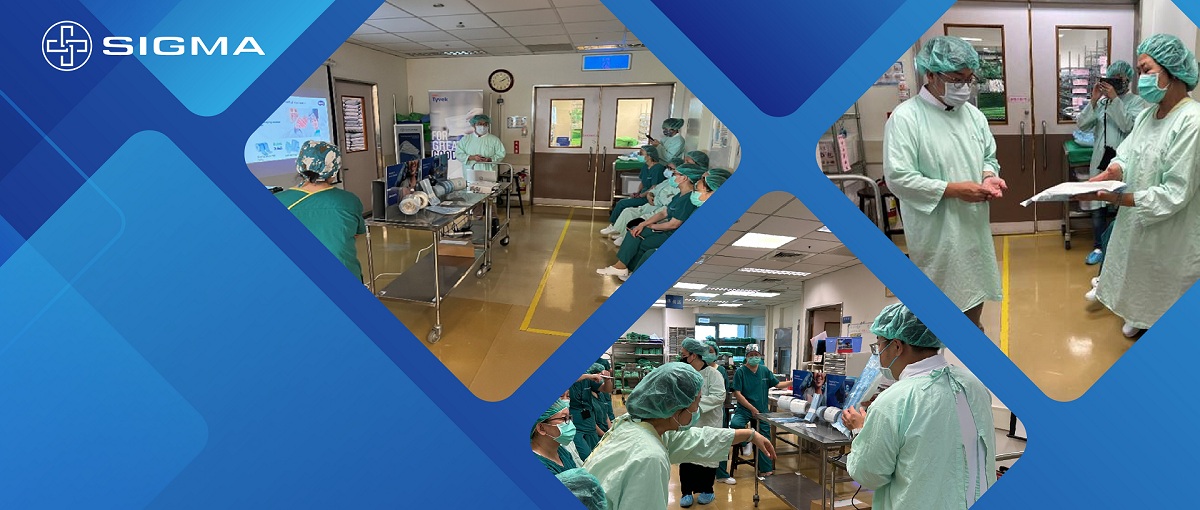
Identifying Frontline Needs Through Practical Challenges
SIGMA understands that frontline healthcare professionals do more than just sterilize; they safeguard patient lives by ensuring safety, efficiency, and quality every day. Therefore, we do more than just provide packaging materials—we use educational training to address the most practical questions, from "how to use correctly" to "why it should be done this way." Each conversation represents an exchange of expertise and a building block of trust.
During the seminars, we did not position ourselves as having all the "standard answers." Instead, we guided participants to develop their own judgment based on application contexts, medical packaging material selection, device characteristics, and operational habits. When medical staff begin to evaluate existing processes and explore underlying principles, it signals the start of professional growth—and a deeper trust between SIGMA and our hospital partners.
Through problem-based learning, we better address frontline realities. When every discussion helps resolve practical difficulties, trust accumulates naturally. Moving forward, we will continue to work alongside hospitals to ensure each conversation contributes to improved operational efficiency and patient safety.
A New Perspective on Medical Training: Looking Ahead from Past Seminars
In today's rapidly evolving medical field, hospital education and seminars serve not only as bridges for knowledge transfer but also as critical drivers for skill enhancement and the advancement of industry standards. Looking back at the three hospital education seminars led by SIGMA in 2025, we can not only capture key aspects of past medical practices but also glimpse the future direction of hospital education—particularly from the perspective of addressing the real needs and applications of hospital staff.
I. Precisely Addressing Needs and Strengthening Practical Application
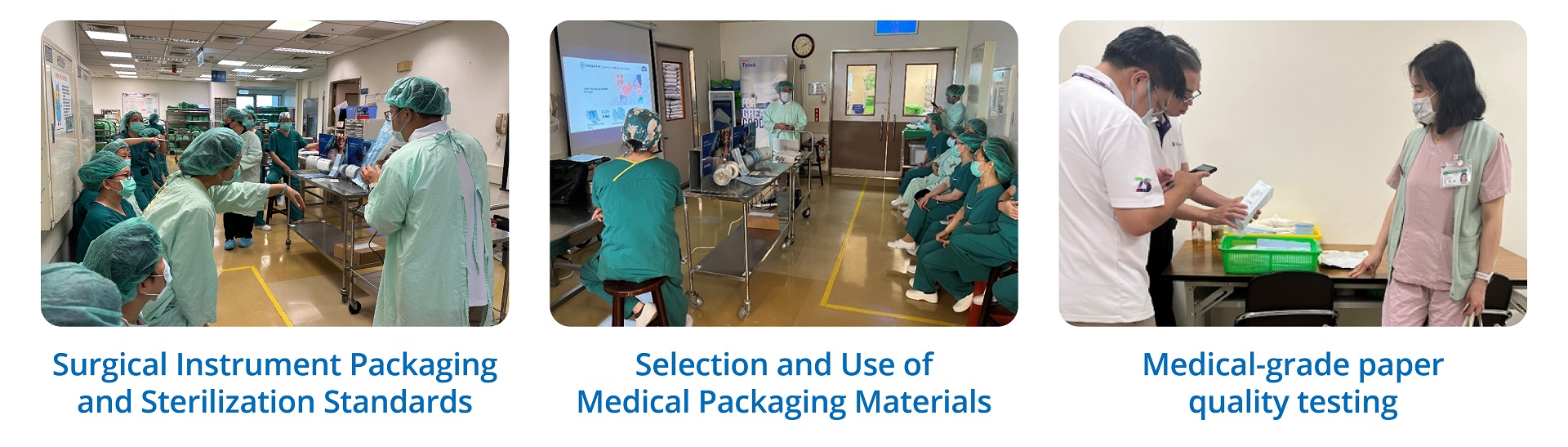
Surgical Instrument Packaging and Sterilization Standards:
The sterile barrier for surgical instruments is not an abstract concept but a line of defense constructed through weight control, space reservation, sealing techniques, and placement methods. From ensuring instrument pouches are filled to no more than 70% of capacity, to avoiding re-sealing after initial sealing, and storing sealed pouches vertically—each seemingly minor detail directly impacts whether sterilizing agents can effectively penetrate and whether the microbial barrier remains intact during storage and before use.
Packaging Material Selection and Use:
For different medical scenarios, such as high-temperature, high-pressure sterilization of instruments used in operating rooms, the seminars covered double-layer packaging, detailing key considerations such as the necessity for the outer pouch to be larger than the inner pouch and the necessity of placing paper-to-paper and film-to-film to ensure effective steam penetration.
Medical packaging materials are a critical system for maintaining medical devices in a minimal packaging state and in sterile condition until use. The process encompasses packaging, sterilization, storage, and use, with the primary functions of achieving sterilization and maintaining sterility. Therefore, material selection is crucial and must meet the dual functional requirements of allowing sterilization while providing a microbial barrier.
For a more detailed understanding of the "Medical Packaging Materials Selection Guide", you can click on the "lined text" to access the SIGMA’s website blog for viewing.
Medical Grade Paper Testing:
SIGMA has dedicated over four decades to perfecting the Sterile Barrier System. With its comprehensive testing equipment, stringent quality control processes, and regulatory compliance aligned with international standards, is fully capable of ensuring medical-grade paper meets sterile barrier requirements. From advanced heat sealers and porosity testers to strictly performed grammage tests, seal integrity tests, and burst tests, every step is executed with precision and a commitment to excellence. Additionally, SIGMA adheres to international certifications such as QMS, ISO13485, FDA, and CE, holding ourselves to the highest standards to ensure product compliance and safety in the global market, providing reliable sterile barrier solutions for the healthcare industry.II. Placing Medical Staff at the Center to Drive Innovation in Education and Training
Entering 2026, as medical quality requirements continue to rise and sterilization technologies evolve, the responsibilities of CSSDs are becoming increasingly significant. As a professional partner in sterile packaging materials, SIGMA deeply understands that the daily operations of every medical professional in the CSSD directly impact the integrity of the sterile barrier and, ultimately, patient safety. Therefore, we are committed to advancing more practical, on-site education and training initiatives driven by the real-world needs of medical staff.
Going Into the CSSD to See Real Needs
SIGMA aims not only to present products in conference rooms but also to visit more hospital CSSDs to engage face-to-face with frontline staff. We find that genuine learning needs often lie in the details of daily operations—from instrument pack weight control, material selection, and sealing techniques, to real-time judgments during sterilization processes. Only by going directly to the site can we truly understand the challenges staff face and provide meaningful assistance.
Four Key Directions for Future Education and Training
To make training content more relevant to the practical needs of CSSDs, SIGMA will focus on the following four directions, continuously refining course design and interactive methods:
- Customized Training Content: Tailoring courses to each hospital's workflow, instrument characteristics, and sterilization equipment, in collaboration with the CSSD, to ensure that every training session can be effectively applied to daily work.
- Hands-On Practice with Case Studies: Using real operational scenarios as teaching materials—such as analyzing the causes of pouch burst, material selection decisions, and common double-layer packaging issues—to guide staff in learning from problems and growing through discussion.
- On-Site Guided Support: Moving beyond single-session courses, the SIGMA team can arrange on-site accompaniment to provide immediate consultation and operational advice during actual work, helping staff translate theory into habitual practice.
- Continuous Feedback Collection and Course Optimization: After each training session, we gather feedback from participants to understand which content was most useful and which aspects need adjustment, allowing the courses to evolve alongside on-site needs.
Starting from Trust, Making Training Truly Effective
From the moment we stepped into the first CSSD, SIGMA has firmly believed that the value of education and training lies not in how much we teach, but in how much the participants take away. True expertise is not built through one-way instruction, but through thinking together with medical staff, collaboratively deconstructing problems, and jointly finding solutions that best fit their environment.
In the future, SIGMA will continue to visit more hospital CSSDs, partnering with more medical professionals to ensure that every training session becomes a solid step toward improving operational quality.