

 Sample Request
 Global 2026-05-19
Medical Device Packaging: From “Industrial Consumables” to the Value Reorientation of “Sterile Barrier Systems”


Over the past year, in our technical exchanges with medical device companies, we have repeatedly observed a highly consistent set of issues:
- When manufacturers switched dialysis paper, cytotoxicity levels exceeded regulatory limits, resulting in full batch scrappage of implantable products.
- During CE review, incomplete packaging validation data forced delays in product launch.
- Seal failures during transportation triggered product recalls.
Although these issues appear isolated, their root cause is fundamentally the same:
Rather than neglecting packaging, manufacturers have long treated sterile barrier systems as ordinary industrial consumables. The industry is now paying a real and significant price for this cognitive mismatch.
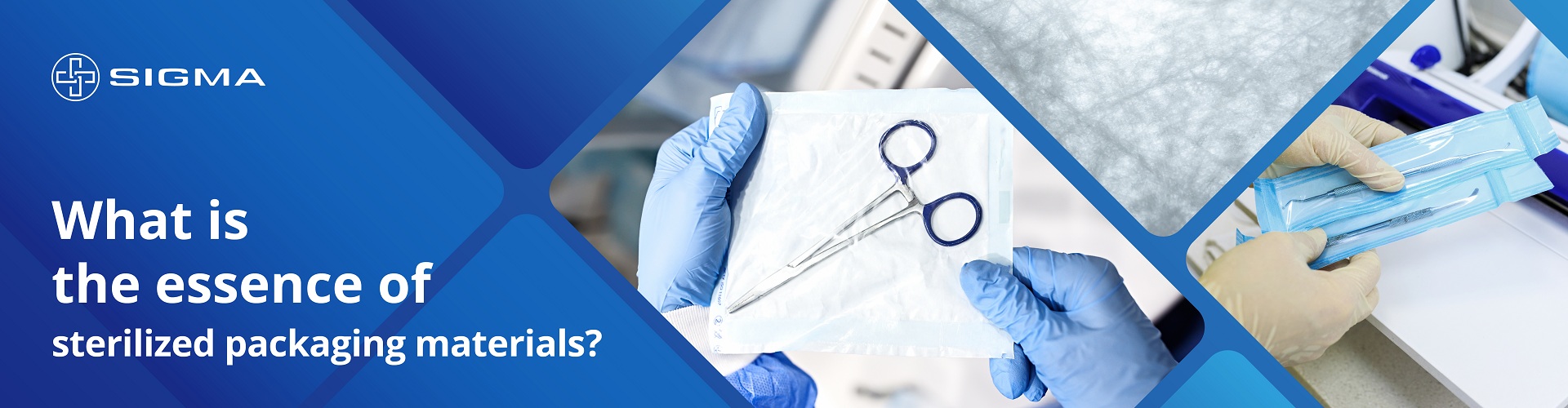
Sterile Packaging Is a Sterile Barrier System
The term “Sterile Barrier System (SBS)” was first introduced in ISO 11607-1:2006 to describe the minimum packaging required to perform specific functions of sterile packaging: allowing sterilization, providing an acceptable microbial barrier, and enabling aseptic presentation.
This definition encompasses three core technical dimensions:
- Minimum unit attribute: Refers specifically to the innermost packaging that directly contacts the medical device, rather than outer transport packaging or storage containers.
- Microbial barrier function: Must provide continuous resistance to microbial ingress, not merely physical containment.
- Clinical usability requirements: Packaging must support aseptic handling in clinical settings, ensuring healthcare professionals can access devices without compromising sterility.
Based on this, a new understanding must be established: Medical device packaging is the final safeguard ensuring product sterility. It is a technically sophisticated sterile barrier system—not a replaceable, generic consumable.
| Old Mindset: Packaging as Consumable | New Mindset: Packaging as Sterile Barrier System |
| As long as it contains the product | Must maintain sterility throughout shelf life |
| Price-first approach | Performance validation first |
| Suppliers can be changed anytime | Changes require revalidation |
| Decided by procurement | Joint decision by R&D, Quality, and Regulatory |
Core Value of Sterile Barrier Systems
From a professional SBS perspective, these seemingly simple packaging products carry three non-negotiable core values:
(1) Physical Barrier: Ensuring Product Integrity
According to ISO 11607, sterile barrier systems must maintain sterility throughout the product’s shelf life. This requires resistance to physical stresses encountered during transportation, storage, and handling.
As a specialist in Sterile Barrier Systems with over 40 years of expertise, SIGMA applies field-proven experience to simulate real-world transport conditions—such as temperature variations and vibration levels. Based on simulation results, appropriate materials are recommended. Laboratory quality control systems comply with ISO 17025.
Comprehensive testing services are provided, including sterilization validation, sterile barrier integrity, packaging strength, material characteristics, tolerance, and stability testing—ensuring optimal protection for medical devices.
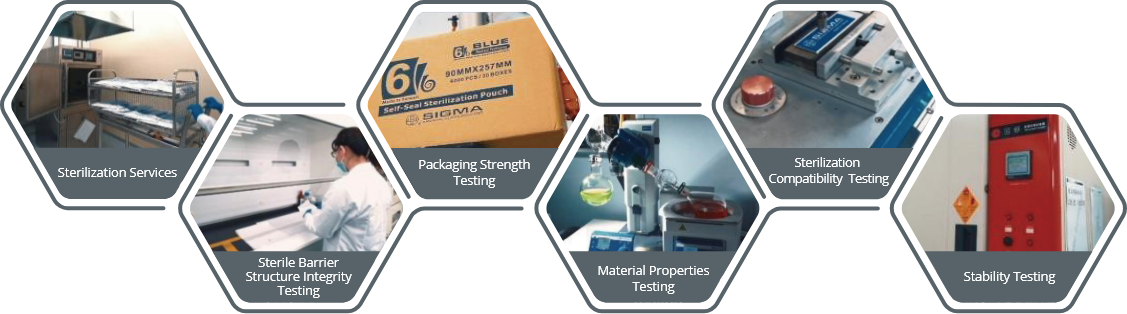
Once the physical barrier fails, the device is exposed to a non-sterile environment, leading to microbial contamination and ultimately batch rejection or recall.
(2) Chemical Compatibility: Safeguarding Biological Safety
While physical barriers address visible risks, chemical compatibility controls hidden biological safety risks.
ISO 11607 requires that packaging materials must not release harmful substances or adversely affect device performance. This means every component—from dialysis paper substrates and printing inks to heat-seal layers and adhesives—must undergo rigorous chemical safety evaluation.
We strictly follow the ISO 10993 series for biocompatibility testing, with key parameters including:
| Key Parameter | Testing Purpose | Standard Reference |
| Toxic substances (e.g., extractables & leachables, heavy metals, solvent residues) | Identify and quantify substances that may migrate into the product | ISO 10993-18 / Pharmacopoeia requirements |
(3) Usability Compatibility: Meeting Clinical Operation Needs
Packaging design must primarily serve safe and efficient clinical use. Manufacturers must comply with EN 868-5, which defines minimum sealing strength requirements:
- ≥ 1.5 N/15 mm for steam sterilization
- ≥ 1.2 N/15 mm for other methods
Using ASTM F88 testing, processes are optimized to maintain peel strength within 1.2–1.5 N/15 mm—ensuring both barrier integrity and ease of opening.
For particulate control, intensive testing is typically conducted during new product introduction and material changes, rather than routine batches. This proactive approach ensures clean opening performance and enhances user confidence in clinical settings.
Why Packaging Has Been Historically Undervalued?
- Hidden risk: Packaging does not directly contact patients, making potential risks less visible.
- Cost-driven decisions: Procurement often prioritizes cost over technical value.
- Regulatory inconsistency: High-risk devices face strict controls, while low- and medium-risk products often have simplified requirements.
- Uneven industry standards: Some suppliers lack proper understanding and implementation of ISO 11607, leading to insufficient recognition of packaging’s technical value.
Industry Trends and Future Directions
- Stricter regulations: EU MDR, FDA, and other global regulators adopt ISO 11607 as the core compliance standard, requiring complete and traceable validation data.
- Globalization: ISO 11607 has become a worldwide market entry prerequisite.
- Upgraded clinical demands: Clean opening and ergonomic design are now essential requirements, pushing packaging toward superior clinical usability.
- Sustainability: The EU PPWR Regulation (EU 2025/40), set to enter into force in August 2026, mandates recyclability, minimum recycled plastic content, and control of hazardous substances.
Through packaging minimization and restrictions on certain single-use plastics, the regulation aims to reduce waste and promote a circular economy, supporting sustainable industry development.
As a leading Asian manufacturer with over 40 years of expertise in medical sterilization packaging materials, SIGMA will continue to align with international standards, focus on the core value of sterile barrier systems, and provide professional and reliable packaging solutions—collaborating with industry partners to uphold the fundamental baseline of medical product safety.